How to take live photos of people for a local newspaper: Viltrox prime lenses instead of dark zoom

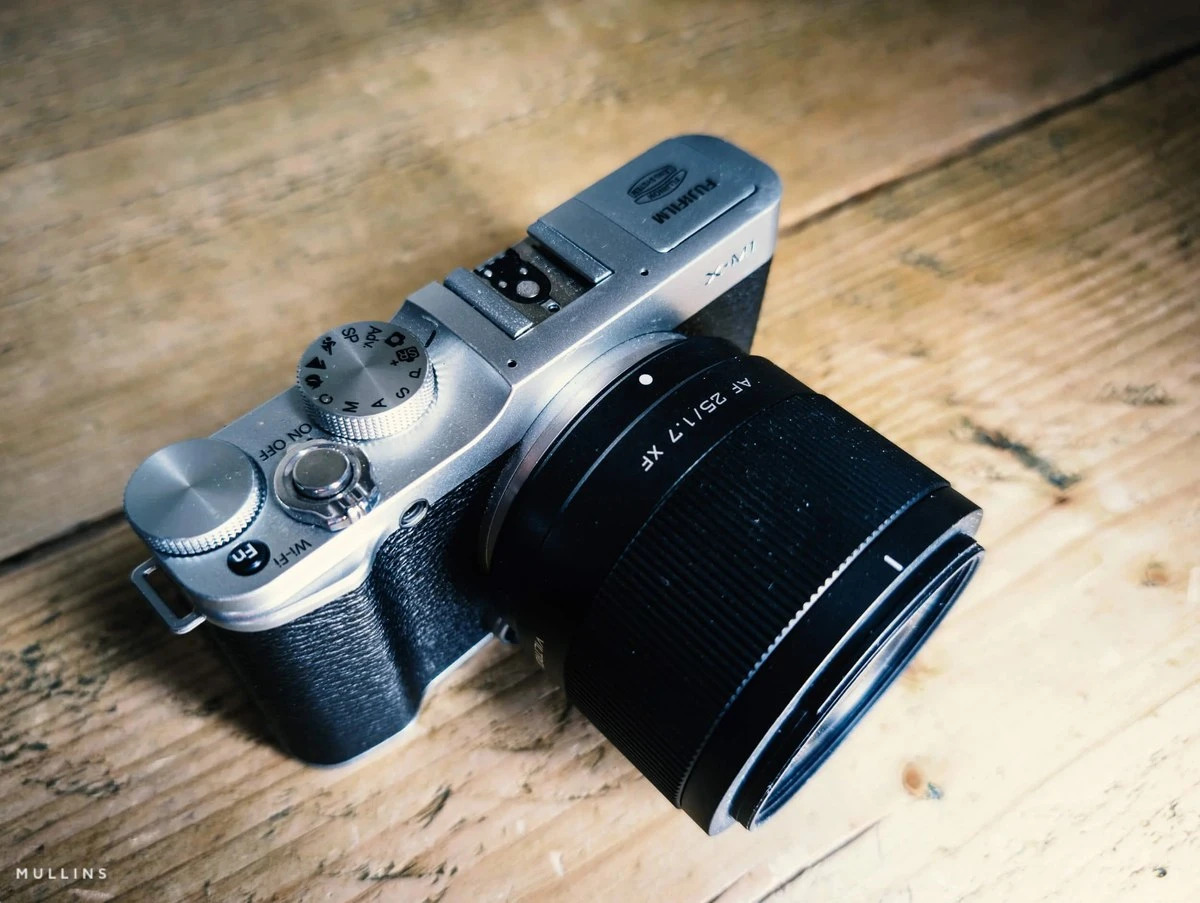
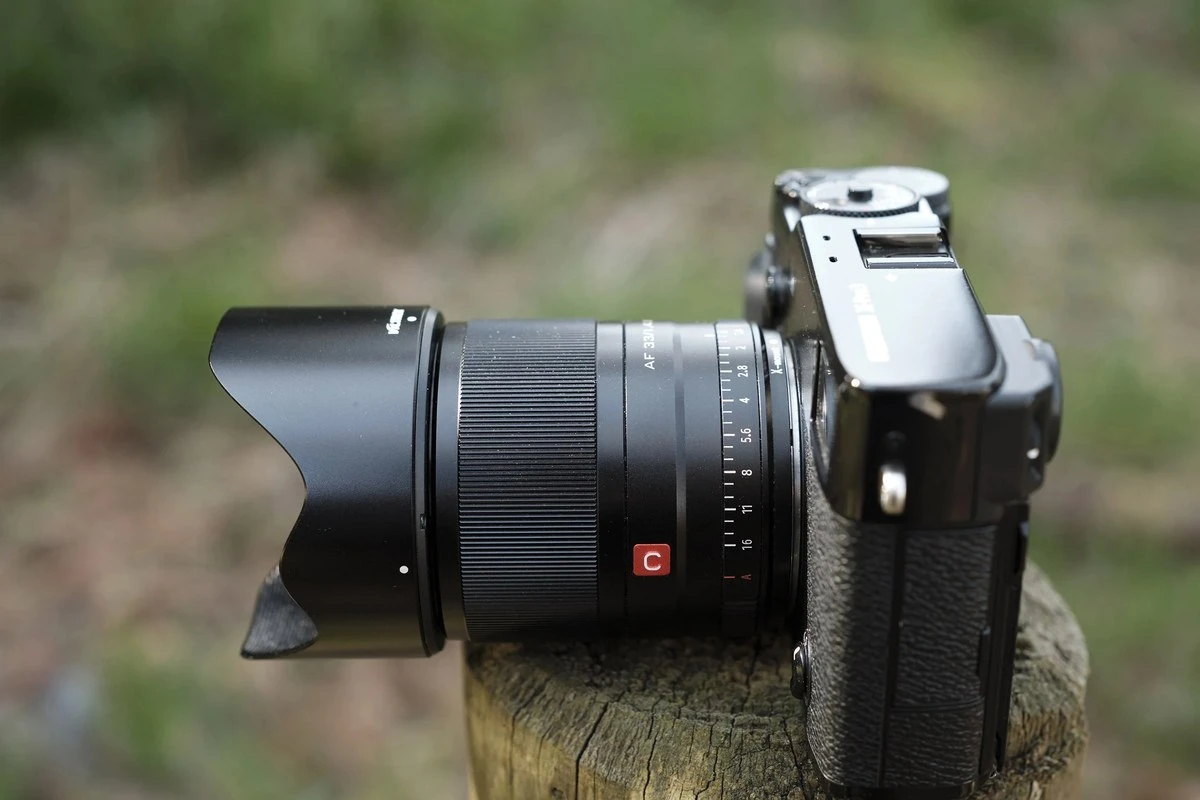 Viltrox APS-C prime lenses allow local media photographers to abandon the formal style of reporting in favor of expressive portrait reporting. Instead of a dark full-frame zoom, fast optics with Sony E, Fujifilm X and Nikon Z mounts let in significantly more light in dark rooms. The optical gain provides a short shutter speed and a clean ISO value without the use of heavy lighting equipment. A compact set of focal lengths of 25 mm, 33 mm and 56 mm focuses the viewer's attention on the character of the person.
Why does a dark full-frame zoom ruin newspaper reports?
A standard complete zoom of the 16-50mm or 18-55mm class forces a journalist to work at the critical limit of light sensitivity in any rural cultural center, outpatient clinic or workshop. When a reporter approaches the subject of photography at a focal length of 33–56 mm, the relative aperture automatically closes to dark values of f/5.0–f/5.6. The camera's automation reacts to the lack of photons by instantly raising the light sensitivity to the limit marks of ISO 6400–12800. Subtle skin tones dissolve in coarse color noise, turning a living face into a dirty spot during subsequent printing on offset paper. The second significant drawback is the forced lengthening of the shutter speed to 1/15–1/30 second if the photographer tries to artificially maintain a low ISO. Any natural human movement, turning the head or gesturing during a conversation inevitably leads to blurring of contours. Instead of a sincere smile or a tense look, the editorial office receives a technical defect that cannot be saved by computer processing. At the same time, excessive depth of field on a closed aperture makes both the hero of the material and the random visual garbage behind him equally clear. Colorful wall calendars, cabinets with folders and a web of cables climb into the frame. The main character literally dissolves in the surrounding chaos. The complete zoom keeps the journalist captive to a technical compromise.
Flash rejection: preserving the trust of heroes and natural lighting
The frontal pulse of the on-camera flash has been considered an obligatory attribute of a district photojournalist for decades, but it is precisely it that finally kills the lively mood of the frame. A powerful direct flash creates an unpleasant greasy glare on the interlocutor's forehead, forms black falling shadows behind his back and flattens the natural volume of the face. The person in front of the lens instantly becomes embarrassed, loses the naturalness of his facial expressions and puts on a stiff mask for a protocol photo. Tension in the frame arises instantly. Fast optics with apertures of f/1.4–f/1.7 turn the existing weak lighting of a room or office into an artistic tool. The photographer works imperceptibly, capturing the emotions, gaze, and tired hands of a utility worker or doctor without blinding flashes and psychological pressure on the interlocutor. The camera sees space exactly as the human eye sees it, preserving the real atmosphere of the scene. The optical blur of the background delicately separates the person from the walls of the office. Thanks to the high aperture, the shutter speed is reduced to safe values, freezing the movement in the frame.
Comparison of optical approaches: universal zoom or a set of fast primes
Going from a single dark zoom lens to a line of discrete lenses dramatically changes the final image quality in difficult shooting locations.
| Parameter | Complete zoom (16-50mm / 18-55mm f/3.5-5.6) | Viltrox prime lens kit (25mm F1.7, 33mm f/1.4, 56mm F1.7) |
|---|---|---|
| Optical circuit | Variable focal length, floating aperture f/3.5–f/5.6 | Fixed focal length, constant aperture f/1.4–f/1.7 |
| Aperture at portrait focal lengths | f/5.0 – f/5.6 | f/1.4 – f/1.7 |
| Difference in light transmission | Basic level (1x) | 10–16 times more light (3.3–4.0 EV gain) |
| Working ISO in a semi-dark room | ISO 3200 – 12800 (rough noise appears) | ISO 400 – 1600 (clean skin texture) |
| Safe shutter speed for photographing people | 1/15 – 1/40 s (high risk of micro-smear) | 1/125 – 1/250 s (reliable capture of active facial expressions) |
| Isolating an object from the background | Weak, background remains semi-sharp | Crisp, soft optical bokeh |
| Behaviour during newspaper printing | The risk of turning small parts into gray mush | Preservation of eye microcontrast and facial features |
| The need for on-camera flash | High due to constant lack of light | Not available when working in the current conditions |
| Weight of one lens | 116 – 210 g | 170 g (25mm), 171 g (56mm), 270 g (33mm) |
| Filter thread diameter | Unconformable (40.5 mm, 49 mm, 58 mm) | Single 52mm standard for all three models |
| Price range per unit | Supplied with camera | From 6,099 to 14,899 UAH depending on the model |
The difference between the relative aperture f/1.4 and f/5.6 is equal to four stops of exposure, that is, the matrix receives sixteen times more light flux at the same shutter speed. This allows you to safely reduce the light sensitivity from the noisy level of ISO 6400 to the comfortable ISO 400, while preserving the volumetric halftones around the hero's eyes. For example, a wide-angle from the Air series costs from 6,099 to 8,100 UAH as of mid-November 2026, while a classic fast-firing metal fifty will cost from 8,720 to 14,899 UAH. Even a full set of three fixes remains affordable for a limited editorial budget, ensuring a transition to a qualitatively different visual level.
The money is invested in optical physics, not in marketing zooms.
Focal lengths for the district: optical roles when traveling
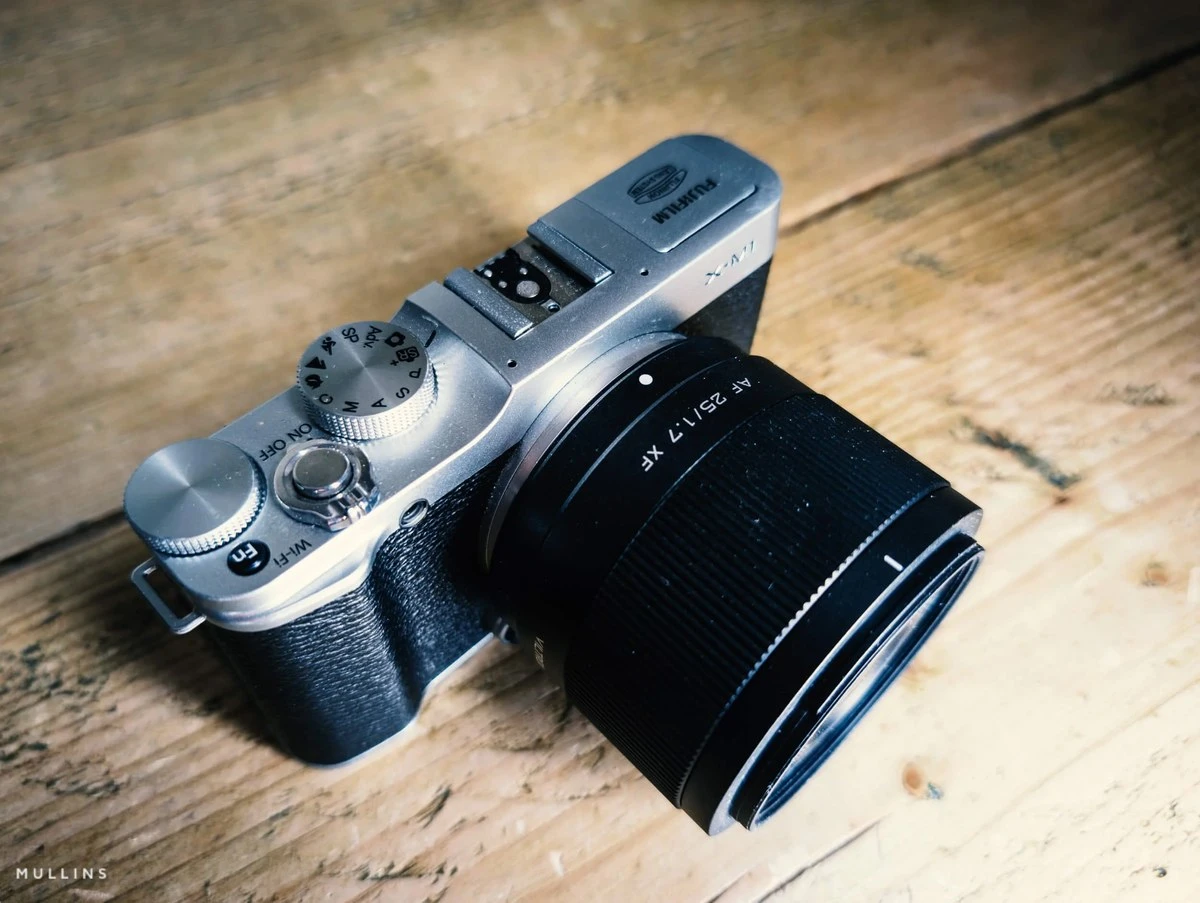 The work of a photojournalist for a regional newspaper is characterized by the unpredictability of locations: in one working day, you have to film another meeting, field work, and an on-camera interview. Three fixed lenses divide the key tasks of the report.
Viltrox AF 25mm F1.7 Air: Close quarters, context and overall plans
The 25 mm wide-angle lens provides an equivalent focal length of 37.5 mm on a crop sensor and covers a 60-degree field of view. This is an indispensable tool for working in small rural areas up to 10 square meters, where the photographer has nowhere to turn his back. The lens allows you to show a person in his natural working environment along with a machine tool, drawings or laboratory equipment. Thanks to the minimum focusing distance of 30 cm, the glass allows you to shoot the hands of the craftsman and important documents up close without losing sharpness.
Viltrox AF 33mm f/1.4: classic genre distance and live dialogue
The focal length of 33 mm forms the equivalent of 50 mm, reproducing the natural perspective of human vision without distorting the geometry of space. Thanks to the f/1.4 aperture, the lens becomes the main workhorse for waist-length portraits and genre scenes during a conversation between a journalist and a hero. The nine-blade diaphragm creates a smooth blur of the background, completely isolating the interlocutor from everyday details in the background. A distance of two steps from the hero does not violate the person's personal space, preserving the effect of sincere presence.
Viltrox AF 56mm F1.7 Air: emotional close-up portraits from a distance
The 56mm portrait focal length is equivalent to 84mm full frame with a 29.8 degree angle of view, suitable for expressive close-ups. The journalist can be several meters away from the podium or workplace without distracting the person from their work. The optical scheme compresses the perspective, softly highlighting the eyes, wrinkles and emotions on a blurred monochrome background. The long distance helps to shoot children or the elderly, who are usually embarrassed by the close-up camera.
Can the Air series plastic case withstand the stress of business trips?
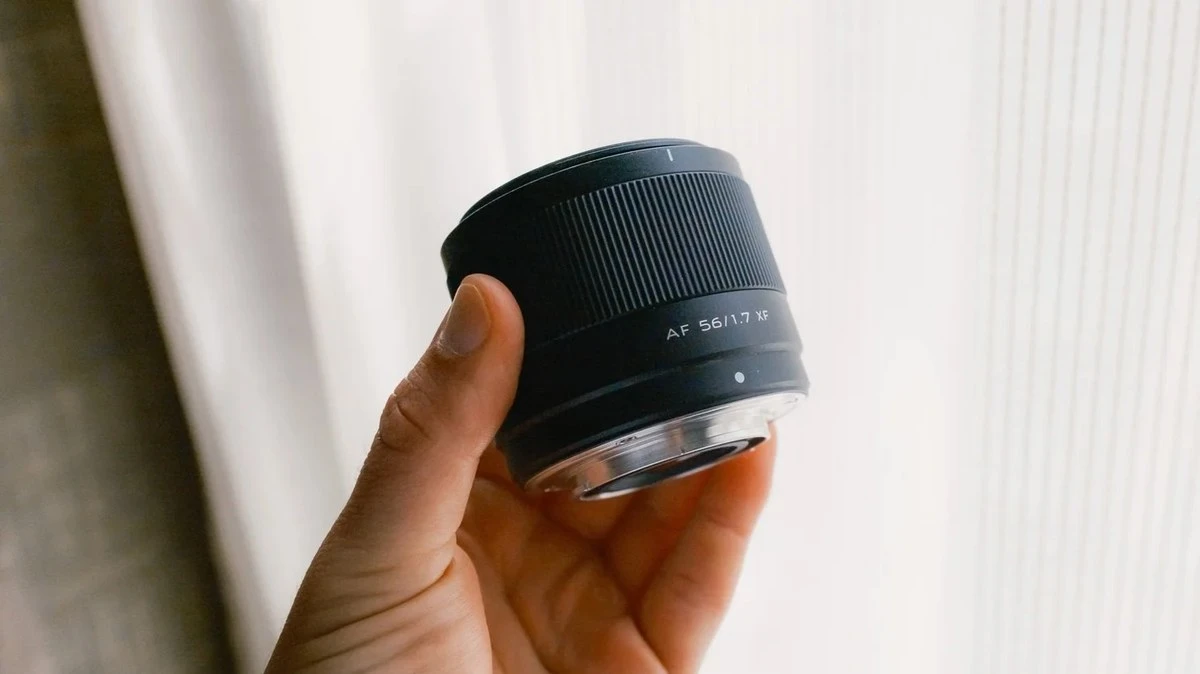 The budget Air series received a lightweight body made of durable engineering plastic, which initially raised doubts among practitioners of the regional press. However, in practice, the rejection of thick-walled metal gave a significant weight gain: the 25mm and 56mm models weigh only 170 and 171 grams, respectively. When a journalist spends a whole day moving around the district center or walking to a remote farm, every gram saved in a shoulder bag saves your back from fatigue. In total, the three lenses in Fujifilm X mount versions weigh 611 grams. Thanks to the metal bayonet flange and wear-resistant plastic of the body, lightweight Viltrox lenses reliably withstand daily trips by transfer transport without backlash in the camera mount. The metal mount has a USB-C connector, which allows you to independently update autofocus algorithms via a home computer without contacting a service center. The body is devoid of unnecessary external switches, so the aperture is adjusted with a wheel on the camera itself. The STM stepper motor is brought to the eye silently, which is critically important when recording a synchronous audio interview on a lapel.
Working open aperture: where do optical compromises occur?
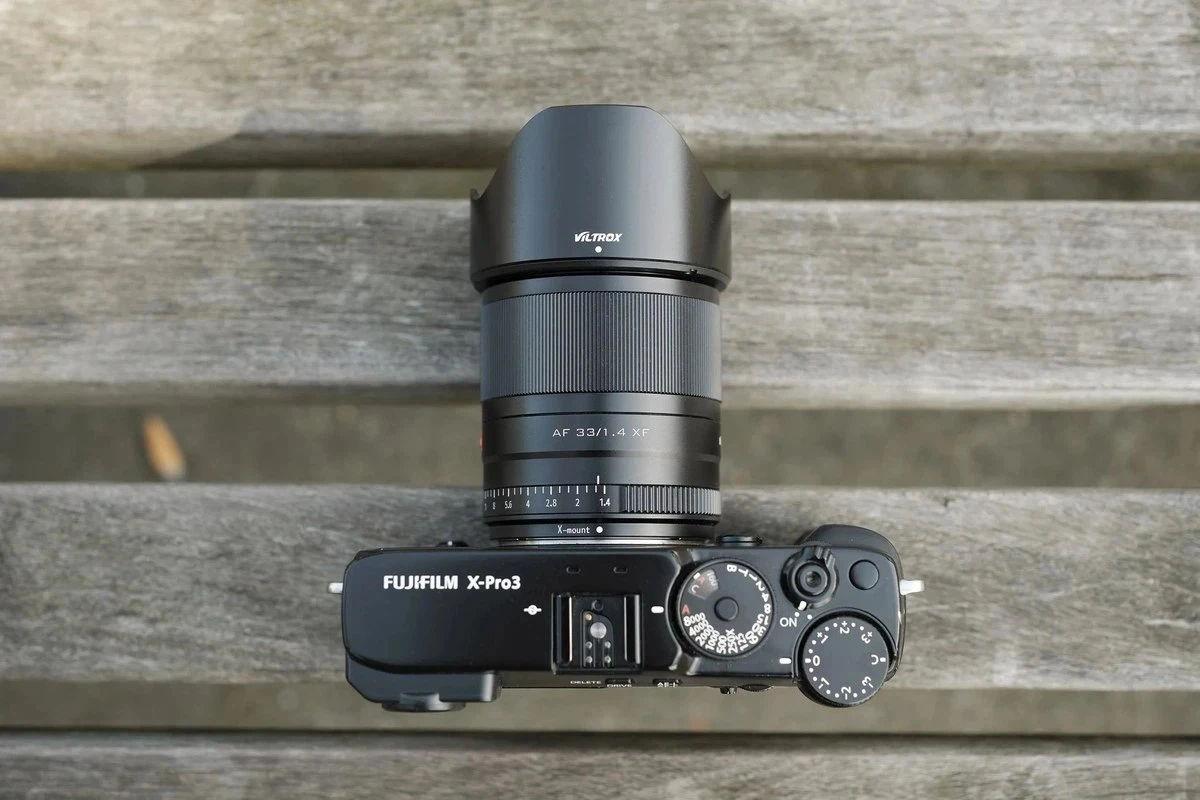 The desire to shoot exclusively at the maximum relative aperture requires the photojournalist to understand the real limits of a budget optical scheme. According to laboratory measurements by OpticalLimits, the center of the frame in the Viltrox AF 33mm f/1.4 has quite working quality even at the open aperture, and the edges of the image at f/1.4 remain soft. If in a reportage portrait the face is located in the center or on the thirds line, this softness works in favor of the drawing, hiding skin defects. However, when shooting a group portrait with several people, the aperture should be closed down to f/2.8 or f/4 to level out the edge sharpness. The second compromise of the 33 mm model is longitudinal chromatic aberrations in the form of purple halos on high-contrast borders in front of the sharpness zone. If a person is standing in a white shirt near a brightly lit office window, the contours may be colored with a colored border at an open aperture. At f/2, the border is still noticeable and only begins to fade from f/2.8, so for such shots, the aperture should be closed down to this value. The 56mm F1.7 Portrait Lens has noticeable angular vignetting in two stops of exposure at f/1.7, which naturally darkens the edges and focuses the viewer's gaze on the center of the composition. The residual vignette can be leveled by correction in a graphics editor.
Why does a single 52 mm thread simplify the work of the editorial team in the field?
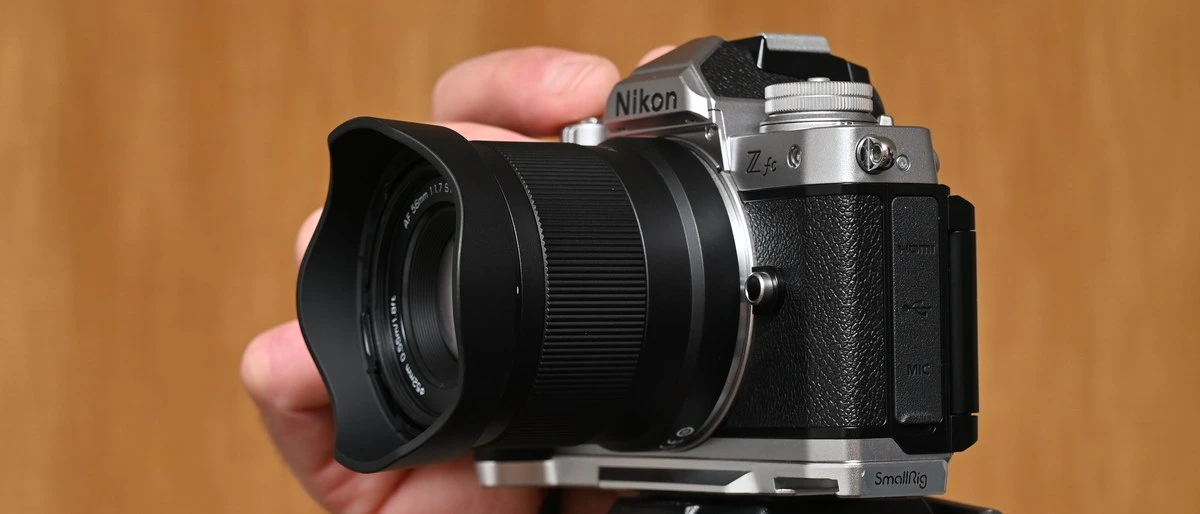 The unification of consumables is an important cost-saving factor for any small regional publishing house. All three lenses in the set — Viltrox 25mm F1.7 Air, Viltrox 33mm f/1.4 and Viltrox 56mm F1.7 Air — have the same diameter of the front thread for the light filter. It is exactly 52 mm. The editorial office does not need to buy adapter rings or three separate sets of filters of different sizes for each glass. One high-quality UV protective filter and one CPL polarizer with a diameter of 52 mm are enough to fully cover all the shooting tasks of the trio. The polarizing filter saves shooting during summer field reports, effectively eliminating parasitic glare from the windshield of a combine harvester or the surface of the water. Quick replacement of the filter from wide-angle to portrait takes a matter of seconds right in the field. In addition, the protective filter reliably protects the front lens from field dust, accidental splashes and fingerprints. One filter in your pocket covers the needs of all optics.
When a set of fixes requires a stop: the real limitations of optics
Discrete optics have specific operational limits that must be considered before going on complex tasks. There is no optical image stabilizer in any of the three lenses. If the journalist's camera is not equipped with an IBIS matrix stabilizer, shaking will be noticeable when shooting dynamic video from the hands. In photo mode, this disadvantage is easily compensated for by short shutter speeds from 1/160 second due to the aperture, but video shooting will require a tripod or a stop. The second strict limitation concerns the lack of rubber seals for protection against moisture and dust in the Air series cases. Working in heavy rain during accident elimination or street rallies without a special waterproof case is strictly prohibited. In addition, the 56 mm portrait lens has a minimum focusing distance of 55 centimeters, which makes macro shooting of small details such as awards or certificates impossible. To fix small objects on the table, you will have to cross a 25 mm wide board with 30 centimeters of MDF.
The constant change of glass during a dynamic rally requires the journalist to plan shooting points in advance.
Protecting portraits on newsprint: managing contrast before printing
Preparing reportage photos for printing on rough newsprint is significantly different from publishing photos on a website or social networks. Newspaper offset raster has a high dot compression rate, which is why dark halftones quickly merge into a solid gray mass. If the photo is initially taken with a dark zoom on the edge of noise with flat contrast, the printing press will completely blur the boundaries of facial features and eye expression. A fast aperture creates high optical microcontrast directly on the camera matrix. The natural separation of the figure from the background by optical bokeh ensures that even with rough newspaper rasterization, the hero's silhouette will not merge with the background. Processing the photo before sending it to the printer consists only in slightly sharpening the eye contours and controlling the black point, without the need for aggressive noise reduction. A clean frame without digital noise is printed legibly even on cheap gray paper with low density. A living person with a deep outlook and character appears on the pages of the district newspaper, restoring the publication's authority among readers.

Рябенко Анна
Я долучилася до редакції в квітні 2025 року. Для мене ця робота – можливість розвиватися, набувати нового досвіду й бути частиною команди, яка щодня створює корисний і цікавий контент для громади. Люблю фотографувати, відкривати нові теми й робити свій внесок…