
"And your house, as if it were not...": the story of a woman who hid the Ukrainian flag under the floor

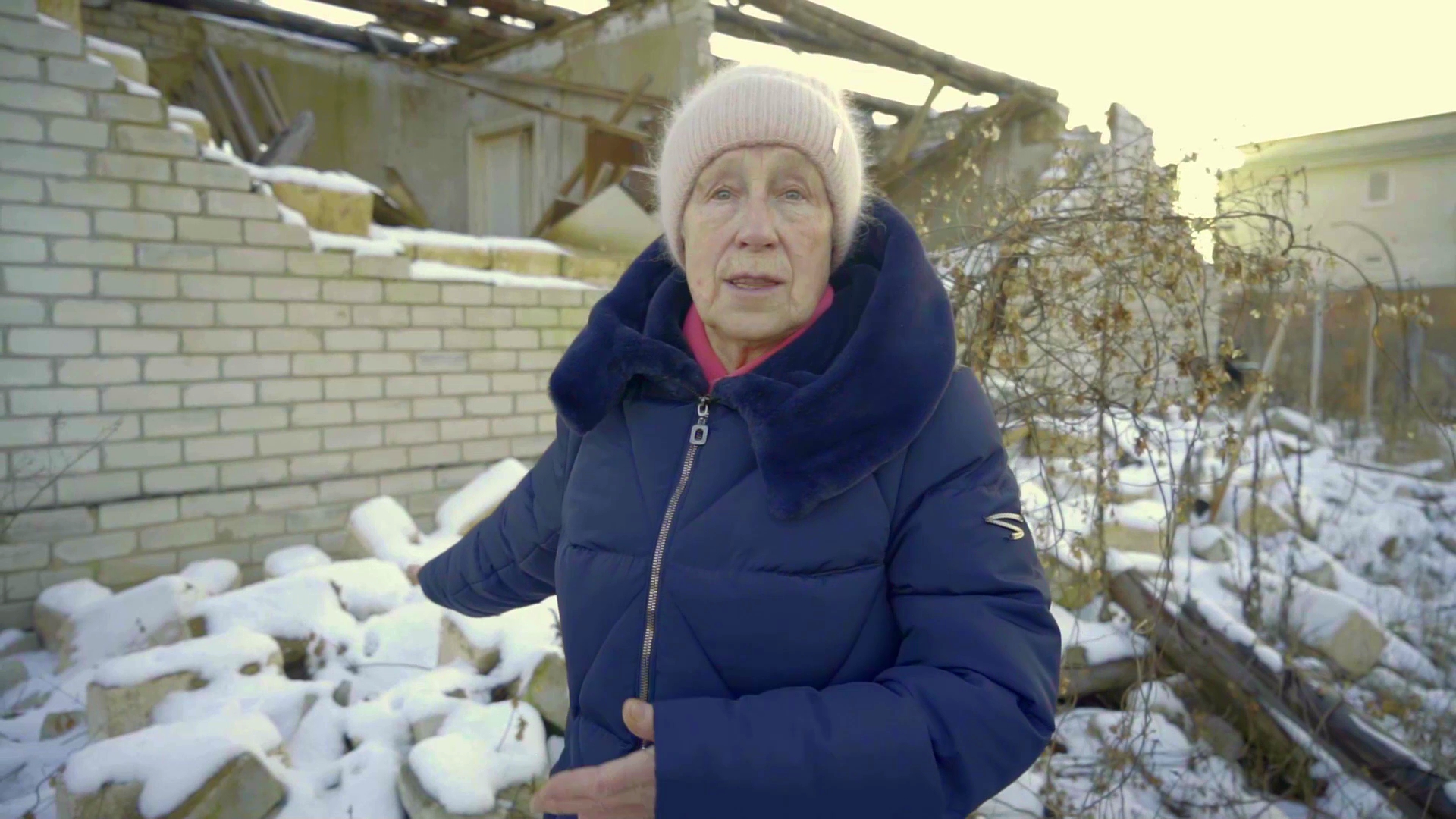 Flowers under the windows, a cozy home, a garden that took years of work… The Russian occupiers turned all of this into ruins. But they could not destroy the main thing — Mrs. Lida's love for her native land and faith in Ukraine. May Blossom and Ashes In May, her street was usually covered in flowers. Mrs. Lida well remembers the smell of lilac, young mint, and field herbs that she had planted along the path under the windows for years. Passersby would stop by her yard, admiring the neat house, neat fence, and blooming front garden. It was not just a manor — a whole world created by her own hands and the labor of her son, a builder. In the spring of 2022, the house still stood white and cozy, like an island of peace amidst the hardships of war. One day, a woman she knew was walking past the yard. It was about one o'clock in the afternoon. She stared at the flowers and walked on. And when she returned in less than two hours, she saw a completely different picture. “And back, she says, I’m going, I’m looking — and I couldn’t believe my eyes… And your house, how it wasn’t there… That’s how it all turned out for me. That’s all,” — quietly tells Mrs. Lida. Today she stands among the ruins of her former home. Under her feet — crumbled silicate brick, around — twisted metal beams, remains of ceilings and a fireplace. Snow is trying to cover what was once her home. But the house was destroyed by more than one blow. It survived four hits. First, the blast wave broke out the windows. Then the shell pierced the roof, flew through the kitchen, destroyed the wall and exploded in the bathroom. The third hit fell on the garage, where her son’s tools were stored. And on May 6, the last, fatal blow occurred. Almost nothing remained of the house. “What war? 21st century!” Like millions of Ukrainians, Ms. Lida could not believe until the last moment that a great war had begun. “At seven in the morning, my friend called me and said: “Lida, the war has begun!” And I said to her: “Tanya, what are you doing? What war? The 21st century, what war?” She replied: “They are bombing!” And I still did not believe it, I was watching TV. Then the planes started flying, bombing. The children called: “Mom, it’s war!” And I said to them: “They will fly over now, and everything will be fine. Don’t worry.” But the planes did not fly by. The air strikes became more and more intense, and the surrounding villages turned into hell. For three days, the woman could not come to terms with reality. During the day, she ran to her friend Tanya, and at night she returned home — to her bed, under her own roof. Later, it became clear: it was dangerous to stay in the house. She had to move to her friend’s cellar. But every morning, Ms. Lida was pulled back. She wanted to see her house, to check if everything was in place. Her friend literally held her back, not allowing her to go out under the shelling. And, perhaps, this is what saved the woman's life. Laptop, washing powder and death under the rubble
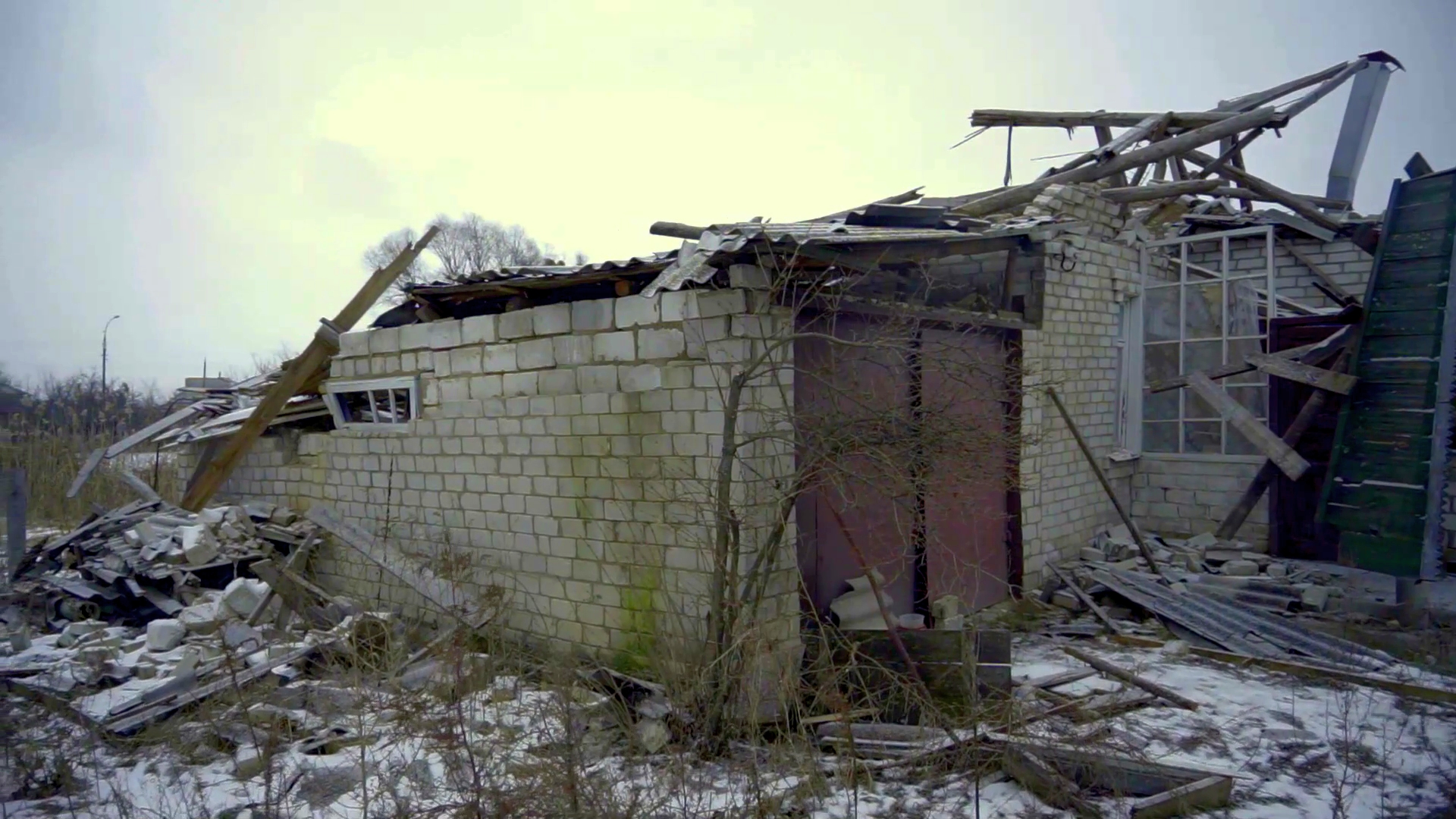 With the arrival of the occupiers, looting began. Russian soldiers entered the yards, searched the houses, and took everything they could get their hands on. Ms. Lida's son is a builder. On the eve of the full-scale invasion, he took professional equipment, expensive machinery, and tools to his mother's garage. He hoped that everything would be safe in the private sector. But the war left no chance for this property either. Most of the tools were destroyed by shelling, and the occupiers did not spare what survived. "The orcs stole the laptop. They ran in, robbed… They even took the washing powder! That's what I want to say: the laptop and the washing powder! And everything else was broken. Everything was left in the house: a wardrobe, a baby sofa, an aquarium, a furniture set, bedding… Everything was under the rubble. Nothing was left," the woman recalls. Today, neighbors and friends forbid her from going inside the destroyed house. The ceilings and wooden beams could collapse at any moment. “Valentyna Fedorovna said: ‘If you go in, I’ll spank you! Just try, the beam will fall on you!’ But I still tried. I thought: maybe I’ll take a stool? Or a door? I really wanted to pull out my little sofa…” But the scariest thing left among the ruins was the furniture that hadn’t been looted. During one of the shellings, an almost three-meter-long ammunition flew through the kitchen roof into the bathroom. It got stuck in the floor and could explode at any moment. The occupiers came twice, tried to pull it out, but to no avail. Then Ms. Lida herself went to their headquarters in the forestry. “I came and said: ‘The house is gone, pull this thing out for me, for God’s sake!’ They did come and pull out the body. And the wreckage remained in the garage. I saved it. I think, let the children see what they were destroying us with.” In the corner of the half-destroyed garage, a rusty piece of deadly metal still lies. Nearby is a mailbox that a neighbor removed, a gas meter, and other remnants of a former life. There are other memories, too. In particular, about my grandfather, whom the occupiers forcibly took out of Kamyanka and left by the road without food or documents. Ms. Lida shared her last loaf of bread with him. “These are not strawberries, these are weeds!” The occupiers behaved on someone else’s land as if they had already become its masters. One day, the Russian military decided to drive heavy equipment right into Ms. Lida’s garden. The woman went out to meet them, trying to protect her beds. “I ask: ‘Where are you going to stop, good people?’ And they answer: ‘This is our land.’ God, when they said that, I started having a terrible hysterics! I cried, shouting in their eyes: “Come home, child, and tell your mother how you mocked the pensioners! What are you doing here? I have strawberries, cabbage planted!” And he looks at me, breaks a bush with his foot and says: “These are not strawberries, these are weeds. There is a war going on here, and she is worried about her garden. We will bring everything here. This is my land, and there are no questions.” In the end, the Russian equipment never entered the yard – a deep ditch on the border of the plot got in the way. Seeing the old neighbor's house, the occupiers contemptuously said: “An old woman lives here, let's move on.” They did not understand that for Mrs. Lida, every strawberry bush, every garden bed and every flower planted by her own hands was a part of her life. And that love for her native land is not measured by the area of the garden. And they also did not know about one thing that the woman reliably hid from prying eyes.
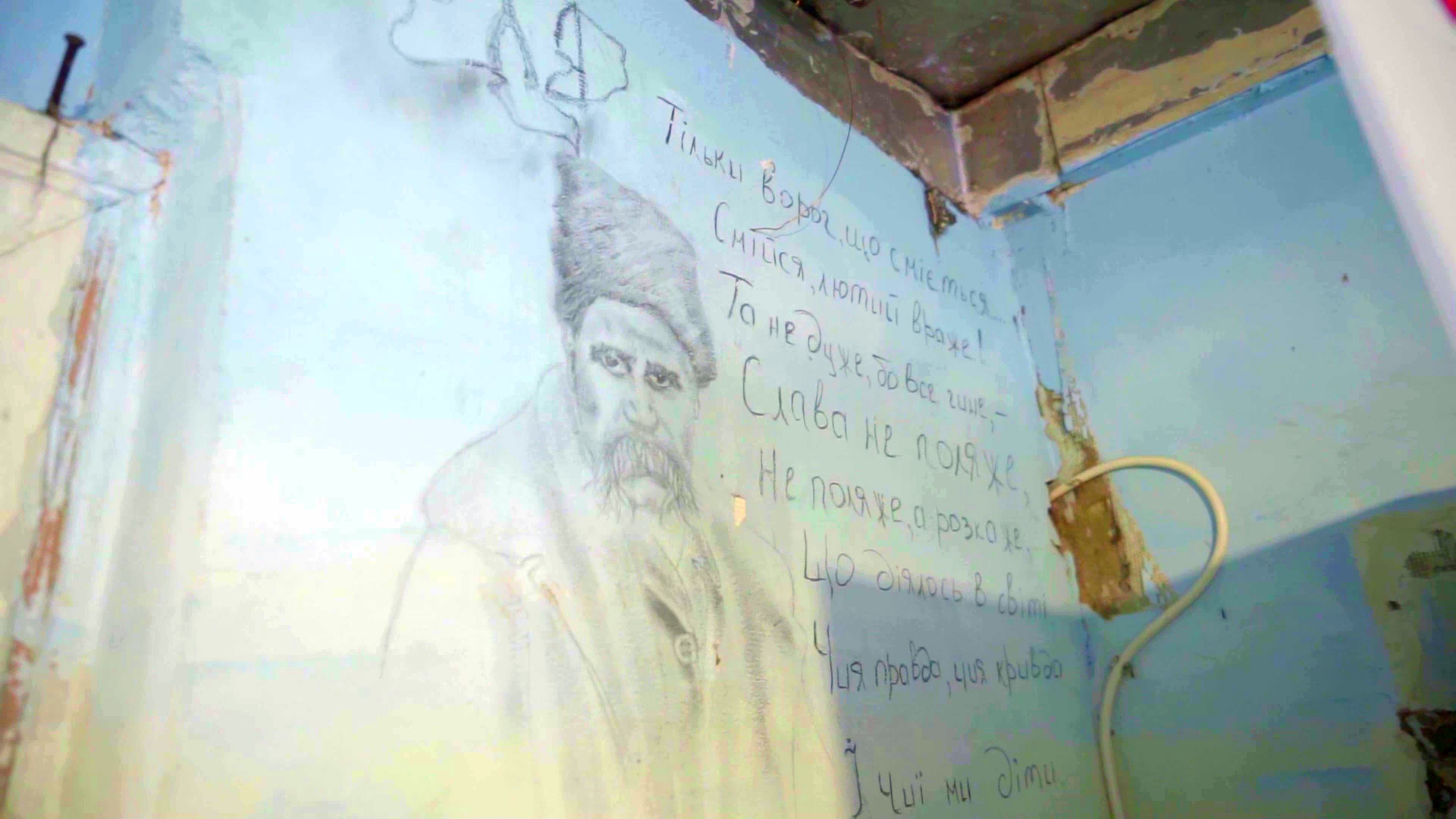
Yellow and blue kitchen and a flag under the floor In 2018, the son gave his mother a special gift — he renovated the kitchen. He painted the walls yellow and blue, and on one of them he personally drew a portrait of Taras Shevchenko and wrote lines from his poetry: “Laugh, fierce enemy! But not too much, because everything perishes, — Glory will not fall; It will not fall, but will tell, What happened in the world, Whose truth, whose wrongdoing And whose children we are.” These words of the Kobzar on the blue wall became a kind of symbol of the family. When the village was under occupation, Mrs. Lida did something that in those days could cost her life: she took a large Ukrainian flag and hid it under the floorboards. She walked on it every day, but did not reveal the hiding place to anyone. When the Russian troops retreated from the vicinity, and the situation still remained dangerous, the woman took out the flag and hung it in the most prominent place. "When my son arrived, he saw the flag and said: 'Mom, why did you risk your life? If you weren't there, we wouldn't be here either!' Well, thank God, I have a guardian angel, he took great care of me. And I hate the Russians with all my heart and soul! And they will never be forgiven. Never!" "Ours!" Mrs. Lida remembers the day of liberation in every detail. It was around seven in the morning. Vova's neighbor, who had gone to Kremyanets Hill to catch a mobile phone signal, came running with the good news: "Lido! Can you imagine, I saw our guys! I saw the flag!" A few minutes later, neighbor Olya came running: "Lido, run out quickly!" "We jumped up the hill – there were twelve of us. We look – the military are coming. We all shout: 'Hurray! Ours! Ours!' And we ourselves come closer and think: is this true? Is it really ours? We simply could not believe our eyes! We approach, crying, and the guys smile. The first thing they said: “Glory to Ukraine! Thank you for coming! We have been waiting for you so long!” This was joy… Incredible joy”. Instead of an epilogue. We are alive – we will live Today, ruins remain from Mrs. Lida's former home. There is no blooming front garden, cozy kitchen, furniture and that very little sofa that she so wanted to save. But what remains is what the occupiers could not take away. Her dignity. Her Ukrainian flag. Her memory. Her love for her native land. The woman stands among the ruins of her former life, looks at the destroyed yard and says with amazing inner strength: “Everything is broken. There is nothing. But we are alive. We will live and work on”. And in these simple words there is more power than in many loud speeches. Because a home is not only walls and a roof. These are people who did not betray themselves, even when they lost everything. And in the spring, flowers will bloom again on the mutilated land. Like Ukraine, which will definitely be reborn. Vladlen Nol photo by the author

Григоренко Костянтин
Головний редактор сайту ,видавець медіа "Обрії Ізюмщини",директор ТОВ "Обрії 1919" Основна спеціалізація -політика ,репортажі ,інтерв'ю . Досвід роботи -очолюю медіа з 2003 року. Освіта -Харківський державний педагогічний інститут, Харківський регіональний інститут державного управління Національної академії при Президентові України. Адреса: Ізюм…