"Our soul remained in Izyum..." A family of displaced people dreams of returning home


 Izyum is a beautiful, majestic city in Ukraine, which is located at the foot of the highest mountain in the Kharkiv region, Kremenets, on the winding banks of the Seversky Donets River. Since April 2, 2022, it has been temporarily occupied by the Russian Federation. The Golyk family, who lived on Independence Avenue, managed to escape from the hell of bombing and shelling. Today, this family temporarily lives in the territory of the Blyznyukivska community, is trying to somehow arrange their lives and dreams of returning to their native Izyum. Peaceful life Independence Avenue is a large microdistrict of Izyum. Between the five- and nine-story buildings there is a cozy park, and every morning a noisy crowd of children rushed to school No. 5 and No. 3. Nearby, the little ones and three kindergartens met, and the adults – the Izyum Instrument-Making Plant. Next to house No. 47, where the Golyk family lived, there was a branch of the Security Service of Ukraine, across the street was the city center of culture, right next door was the central market, and there were shops and supermarkets. Life was harmonious, calm and peaceful. Yuriy is a native of Izyum, in love with the city where he grew up and lived. He is a high-rise installer of metal and reinforced concrete structures by profession, as well as a slinger and gas cutter. On February 24, the husband was supposed to go to Mariupol to the Azovstal plant, where a large-scale construction project was planned. The bags were packed and the last night before the war, the head of the family really spent “on suitcases”. Olena worked for many years as an assistant teacher in kindergarten No. 16. She adored her little students, and they, in turn, responded to her with childlike, direct love. Their younger son, Bohdan, was preparing to become a bachelor of the Kharkiv National University of Radio Electronics and was studying remotely in his fourth year of university, while the eldest, Oleg, had long lived in Kharkiv.
 War Yuriy was prevented from going to Mariupol by the war. Planes with deadly weapons flew to Izyum on the night of February 26. The man recalls: "My mother's house is on Sobornaya Street, so after the night bombings I decided to see if it was intact? I walked through the streets of Izyum and could not understand what was happening at all. I saw a five-story building burning, school No. 4, the furniture store "Slon" and the store "Allo", there were no windows in the post office building and the restaurant "Yuvileyny". My mother's house remained intact at that time, but now I don't know."
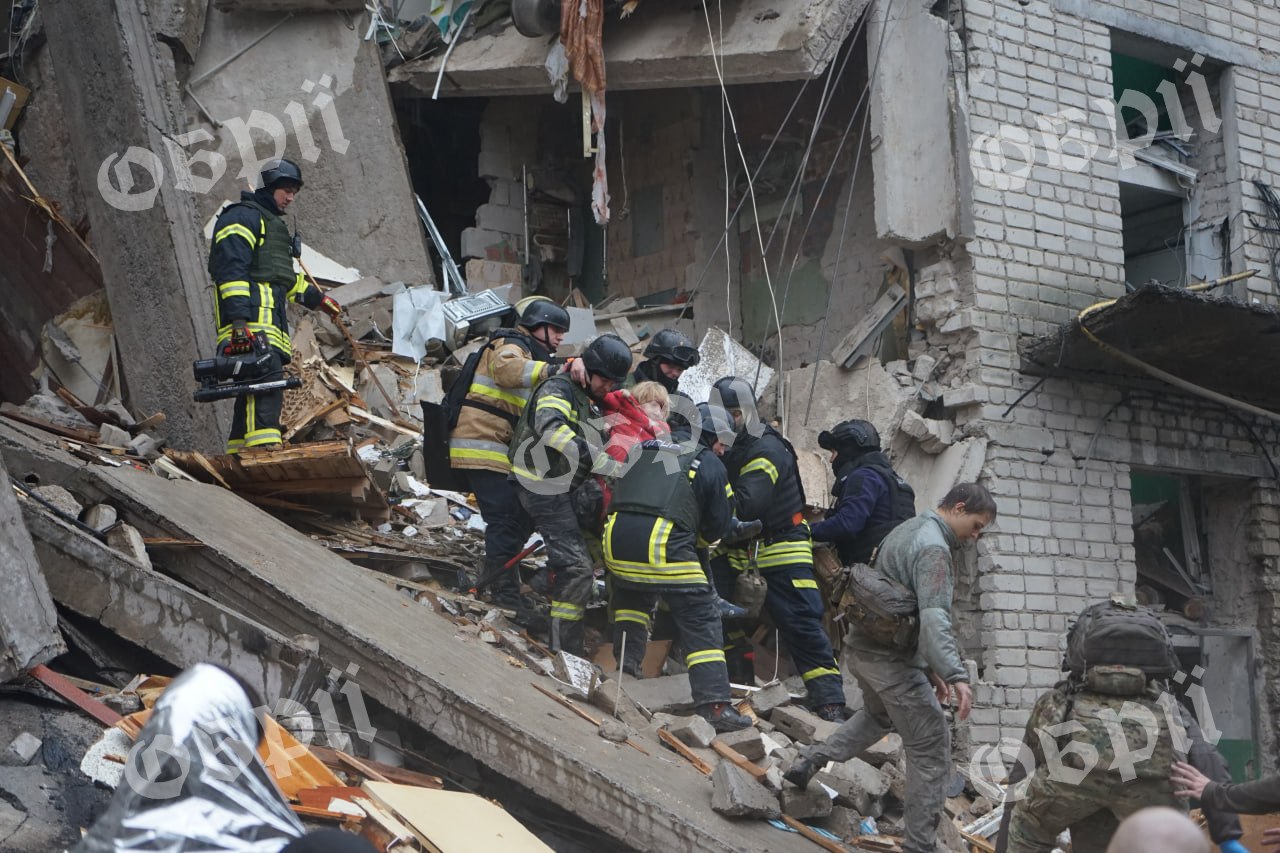
There was a real bomb shelter under the house where the family in question lived, so they were lucky. When the war was announced, Yuriy and his men went downstairs and, together with the utility workers, they were able to restore order there at least a little. Yuriy says: "My head was in complete chaos. I didn't understand what to do and how to protect my family. While the shops were open, I tried to buy as much food as possible, because the hope for a quick end to the conflict faded with each time I went outside. I saw dead people, I saw how, between shelling, bodies were buried in flower beds, only lightly sprinkled with frozen earth. And I didn't say anything to my wife and son, who practically didn't go outside the yard, because I felt what the reaction would be. And at that time I hadn't yet decided whether to leave the city." Every night, a plane would fly in and bomb the city, and the people of Izyum would sit in bomb shelters, chattering their teeth from both the cold and fear. And in the morning, they would try to get out of their shelters again and buy something edible. According to Yuriy Golyk's recollections, there were various incidents during this time, even some that were unpleasantly shocking, because some people dragged freezers, televisions, and some furniture from half-destroyed stores in the burning city… In early March, the city lost water because the water supply was damaged. On March 6, the Rashists bombed a factory, hit a substation, a high-voltage pole fell, and part of Izyum was left without electricity. There had been no heat for a long time. On March 9, a rocket hit house No. 47 on Nezalezhnosti Avenue and damaged the roof, punching a hole in the entrance. In the Golyk's apartment, windows flew out and doors bent. The men somehow closed the hole in the roof, covering it with reinforcement and boards, and lined the bottom with film so that it wouldn't leak too much. And only then did Yuriy realize that he had to leave. Bomb shelter The actual bomb shelter has two exits and consists of many rooms where people gathered in groups. There were 17 people in the room where Holika was during the bombing. Olena recalls: "At first, we found a wooden pallet and the three of us sat on it, then we collected more of them and arranged a place for ourselves to spend the night. People carried warm things, blankets, pillows to the bomb shelter, because it was very cold. So we pulled together what we had from home. During the breaks between shelling, we ran home to get something to eat, and I terribly regretted not baking flatbreads, because there was less and less food left. It's hard to remember how we survived there, but we're all adults, so it was easier for us. The children often cried because it was scary and dark when the lights were turned off. Babies were carried in strollers, rocking them in turns. And I also remember the big dog that the owners left behind. She was very afraid of the shelling, so she hid near us." Damp cement walls, a dirty floor covered in cement dust that rose with any movement, cobwebs and bags of garbage. There was a toilet in the bomb shelter, but it wasn't prepared, so the stench spread everywhere. To make it a little warmer, people covered the doors with blankets and oilcloths. Some brought chairs from their apartments and spent the whole night on them. And during the day everyone tried to get to their apartments. It was even colder there, but it was home. "Several times, they brought sausage with bread, cookies, and even gave us fish once. We shared the food among ourselves and everyone got a piece. While there was light, we cooked porridge, heated tea, and I even managed to cook borscht. The borscht that remained in the pot froze, but it also saved us, because we managed to warm it up on the fire and ate it with gusto. Sometimes we caught the Internet and then we could tell each other the news – that was important," Olena emphasizes. The people hiding in the bomb shelter did not know about the evacuation of the population. They only watched as those who had their own transport or acquaintances with cars gradually left. Those who stayed did not lose hope that this horror would soon end.
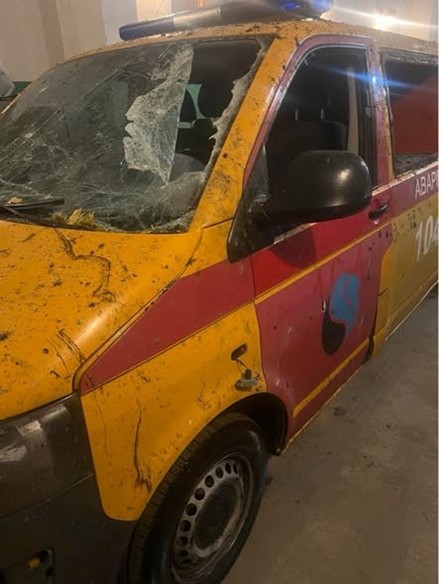
The Road to Safety The Golyk family managed to leave by accident. On March 12, when the issue of departure was agreed upon at the family council and people were looking for an opportunity to do so, they saw a bus not far from the house. This was their lifeline. Having informed everyone who heard them about the transport, they grabbed their bags and rushed to the bus. However, only a young man Maksym and a 70-year-old woman Arkadiyevna, who, in galoshes, clutching a handbag with documents to her chest, also managed to take a seat under the shelling of the occupiers, used this transport. They rode in complete silence, listening to the explosions and machine gun bursts. Three military personnel and a medical worker accompanied the 22 passengers. “I was sitting by the window and saw an explosion on my side, everything in the bus creaked and it started to lose speed. Miraculously, the driver managed to reach the checkpoint under the shelling, where the soldiers began to drop us off, covering us. Among the passengers was a woman, Iryna, with a large dog and many suitcases, and an 85-year-old grandmother who could barely move. Iryna could not get the dog out of the bus, so she “caught” several shrapnel, the dog’s leg was broken, and the driver and the soldier who was holding the door were injured. Everyone else ran to the checkpoint, where the guys standing at the checkpoint seated us, covered us, gave us tea, and helped us as best they could. The wounded were given medical care, Iryna’s hand was sewn up live, because there was no anesthesia – that’s what I saw before my eyes. She was the one who said that she saw our bus hit by a mine and blown to pieces,” says Yuriy. From 6 p.m. to 4 a.m., adults and children sat in a cold shelter, not knowing what their tomorrow would be. In the morning, the military stopped the Ural and, again under fire, loaded the bus passengers into a large car. The grandmother was literally thrown into the back. In the dark, with their heads bowed to their knees, the passengers left Izyum into the unknown. Then there was a short rest at the school in the village of Dolyna, where people charged their phones and drank tea. And again on the bus, the road to Sloviansk. "While we were driving, I heard the roar of the plane all the time. The military who accompanied us ordered us to bow our heads to our knees. We obeyed and thought only of one thing – it would all be over soon. But it turned out that there were still many trials ahead, – says Olena. – Slavyansk was met with a constantly wailing siren and a huge crowd of people who could not get on the trains. The trains still stopped sometimes, but they loaded women with children on them, and my husband and I did not expect this. So we looked for a train, and over the loudspeaker they announced that the movement of electric trains in the direction of Lozovaya had been stopped. Fatigue and hopelessness took their toll. We just wanted to hide somewhere or wake up from this nightmare. And then the message: the train to Lozovaya is coming on the first journey… How we got to Blyznyuky, how we looked for volunteers to settle our acquaintances in Lozovaya, while our relatives were waiting for us in Blyznyuky – I don’t really remember. We recovered at the station in Blyznyuky. Quiet. Calm. And a nice woman came to our aid with a question: “Do you know that the curfew has already begun?”
“I don’t want to have such trials in my life again,” emphasizes 22-year-old Bohdan. “Based on information, even before the start of hostilities, I asked my parents to hear me and leave the city in advance, but no one listened to me. I couldn’t leave my parents, so I gathered the things that were important to me and always carried them with me. My mother tried to create some kind of comfort for me, my father thought about how to feed us, and I dreamed that my parents would agree to just leave that hell.” The most valuable thing in a person is his life, and in the bomb shelter, and then on the bus, the young man said goodbye to it several times. Later, he admitted that he felt somehow offended that he didn’t have time to achieve what he had planned, and he was a little angry with his parents, who did not agree with his opinion. Bohdan notes: “Now we are in relative safety, I am writing my thesis and looking for an opportunity to earn money. I believe that the war will end soon. I have no doubt in Ukraine's victory and that I will build my future only here – on my native land. " The Golyk family considers life without a home March 12 as their second birthday, because they are really lucky. Now they are internally displaced persons – people who do not have their own housing, do not have a job and do not know their future. Yes, they receive humanitarian aid, thank fate for the opportunity to live, help relatives with the household, look for at least some kind of job and … every hour they check the news feed and try to call their relatives or acquaintances, friends or buddies … to someone who is in Izyum, who knows if their house has not been destroyed. After all, in the two-room apartment on the fifth floor there remained not only things dear to their hearts, but their soul, which longs to return home. Let it be a half-destroyed, mined, but a OWN house. Iryna Voronkina https://www.nove.in.ua