"Wheat should cost 6,700, but they buy it for 3,200": how a farm in Balakliya survives

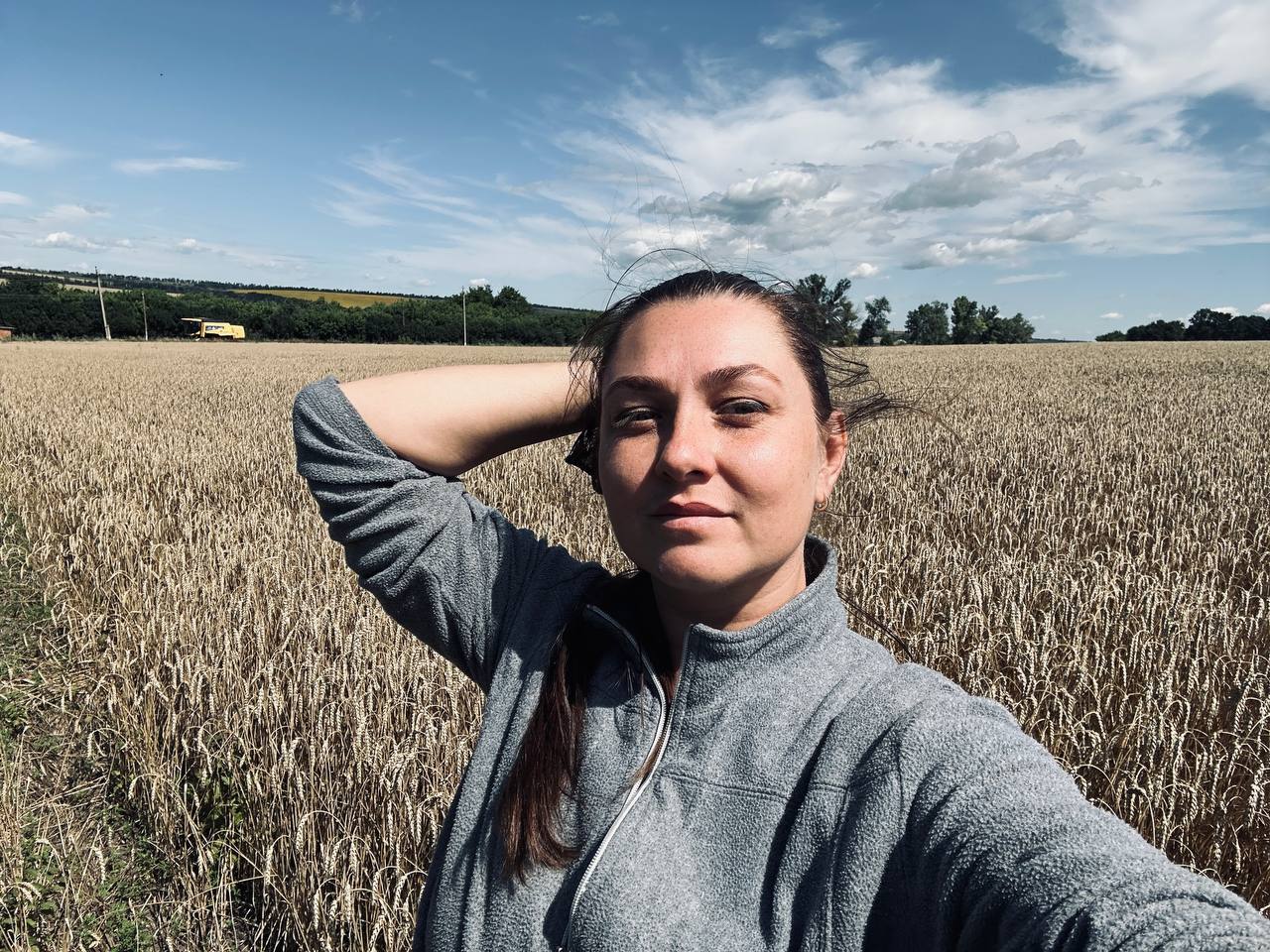
There is a small agricultural enterprise "Agromama" in the Balakliya community. Due to problems with logistics, low purchase prices and the shutdown of processing enterprises, its director Anna Strakhova is forced to keep the harvested crop in elevators and pay for its storage every month. At the same time, the costs of fuel, seeds, salaries and rent do not disappear anywhere. The enterprise cultivates lands near Verbivka and Pryshyb. This year, about 200 hectares were under cultivation, and next season they plan to increase the area to 300 hectares thanks to land clearance. Its director Anna Strakhova shared with the readers of the publication "Obriya Izyumshchyny". – This year, we completed the harvesting campaign before the start of prolonged rains. We managed to harvest all the sunflower crops on time. However, getting money for the grown products turned out to be much more difficult than harvesting the crop, – notes Anna Strakhova. Selling the crop to no one The farm adheres to crop rotation: approximately half of the area is allocated for sunflower, the rest for wheat and other grain crops, in particular barley. The ratio of crops is adjusted every year. This year, all the sunflower was harvested before the rains. However, only half of the harvest was sold, the other part was sent for paid storage at the elevator. There they are waiting for a possible change in the situation with exports and purchase prices. – We sold part of the sunflower, and we are storing the other half at the elevator. We hope that, perhaps, the ports will open and the price will be adjusted. But the forecasts are not encouraging yet. Large oil refineries are not accepting us now, because they cannot export already processed oil. Logistics is complicated and very expensive, – explains Anna Strakhova. According to her, problems with exports affect not only farmers, but also processors. Due to the inability to export finished products, enterprises limit the purchase of raw materials or temporarily stop accepting them altogether. In particular, the Vasyshchev Oil Extraction Plant, where the farm planned to send sunflower, has suspended work until November 10. The enterprise processes seeds into oil, meal, and briquettes, but is currently having problems with working capital. The situation is also difficult with wheat, which was harvested in the summer. It is also practically impossible to sell. There is a surplus of grain on the market, but there are not enough buyers. “The wheat is lying in the elevator, and we pay for its storage every month. No one is taking it. Even if we wanted to sell the entire volume today, we would not be able to do so,” says the farm director. To understand the situation, Anna Strakhova gives specific figures. In order for the enterprise to break even on the cost of growing wheat, a ton would have to cost at least 6,700 hryvnias. However, some of the grain had to be sold for 4,000 hryvnias per ton. This is a batch of about 100 tons. Currently, buyers' offers are even lower – approximately 3,000–3,200 hryvnias per ton including VAT. And even at such a price, it is not easy to find someone who will agree to buy the grain. Grain storage fees When the harvest cannot be sold quickly, the costs of storing it become a separate financial burden. According to Anna Strakhova, a ton of wheat costs the farm 148 hryvnias per month, and sunflower – about 200 hryvnias. So, for large volumes, even a few months of waiting means tens of thousands of hryvnias in additional costs. In addition, the enterprise is forced to take into account the risks associated with the security situation. Due to Russian strikes, farmers are also worried about the elevators where their harvest is stored. If the grain is destroyed as a result of shelling, the farm may lose production, but the obligations under the storage contract do not disappear.
— We are worried that the grain will not hit the elevator. After all, that is where our harvest is, in which we have invested money. If we lose it, we will be left without grain and with storage costs. These are very big risks, — notes the interlocutor. One possible way to reduce dependence on elevators is to store grain in special polymer sleeves directly on a prepared site. This requires special equipment: a loader that fills the sleeves with grain, as well as equipment for subsequent unloading. One sleeve can hold about 200 tons of grain. However, it is difficult for a small farm to purchase the necessary equipment on its own. For example, a grain thrower needed for unloading costs about 600 thousand hryvnias. — We are currently negotiating with small farmers. If the situation does not improve, perhaps next year we will cooperate and buy such equipment together. This could partially solve the storage problem and reduce costs, — notes Anna Strakhova. Logistics can "eat up" money for grain Another problem is the delivery of products to the buyer. Due to security risks, transport companies from other regions are reluctant to travel to the Izyum region. Previously, the farm could order transportation from large logistics companies, in particular from the Dnipro, and it was cheaper. Now it is necessary to look for local carriers whose rates are higher. The director of "Agromama" gives an example of wheat. If the buyer offers 3,200 hryvnias per ton including VAT, the farm must pay 250 hryvnias for shipping a ton and at least 800–1,000 hryvnias for transportation. Some carriers ask for 1,200 hryvnias, for example, for delivery to Zmiyev or Kharkiv. – As a result, after deducting logistics costs from the already low purchase price, very little remains, – says Anna Strakhova. Loans cover current expenses Despite the difficult financial situation, the farm needs to prepare for the next agricultural season. It is impossible to leave the land uncultivated, even when there is a lack of funds for full field preparation. – Previously, we carried out deep loosening of the soil, but now such work requires significant costs. Therefore, we are now considering the possibility of performing at least the minimum necessary land preparation, – the farmer notes. To support working capital, Anna uses the state lending program at 5.7% per annum. Loans are needed primarily to cover current expenses, payments and preparation for the new season. According to the owner of the farm, the main task for the near future is to close existing debts, and then gradually purchase fuel and seeds for the spring campaign. They save on fertilizers – We don’t even dream of buying fertilizers now, because their prices are astronomical. We need to at least provide a basic start: fuel, sowing material and salaries for employees. Fuel has also become very expensive. For example, a seed unit, which used to be bought for about $200, now costs $240, – says Anna Strakhova. The farm has abandoned corn cultivation this year. Although it was originally planned to sow it, later they assessed the costs and possible revenue and came to the conclusion that at current prices the crop would not cover the investment. There is a shortage of workers A separate problem for a small farm is the shortage of personnel. It is difficult to find people during the field work season, and after the main work is completed, the company cannot financially maintain employees on a permanent salary. “Agromama is currently being helped by a 70-year-old employee. He participated in seasonal work, and after the harvest was completed, he helped prepare the equipment for winter storage: service the components, remove individual parts, and preserve the sprayers and other units,” says the director of Agromama LLC.
Previously, the farm had the opportunity to reserve workers, but the critical status was granted to the enterprise only for a certain period — from spring to autumn. In addition, the need for additional people is greatest during seasonal work. Maintaining an employee throughout the year has now become too expensive. “A person should receive at least 26 thousand hryvnias in salary. But for the enterprise, this is already about 31 thousand hryvnias per month, including taxes and charges. And now I don’t have the money to pay such a salary in the winter, when the main work is completed,” explains the director. At the same time, they are not giving up on the search for new personnel. Anna Strakhova plans to intensify it in January-February in order to find an employee before the start of spring work. Having a critical status gives the enterprise the opportunity to reserve people. Negotiations are already underway with potential candidates. Some local residents are currently working in other regions — on combines and tractors in the Poltava region, at enterprises and in logistics companies. Some are ready to return home, but they have to finish the current season. Areas will increase to 300 hectares Despite the difficulties, the company also has development plans. This year, Agromama submitted applications for participation in the state program of humanitarian demining through the State Agrarian Register. In August, specialists from the Safe Land Solutions organization, who won the relevant tender and are conducting demining work, entered the land plots between Verbivka and Pryshyb. Part of the territories have already been surveyed, and during the work, sappers discovered explosive objects. Now the farm is waiting for the acceptance of the facilities by the Mine Action Center and for official documents confirming that the lands are safe for use. – We have a total of about 300 hectares of land, including the areas that are currently being demined. This year, 200 hectares were cultivated. We hope to receive the relevant acts and certificates so that we can work on these fields in the spring. For the 2027 season, we plan to have all 300 hectares under cultivation, – says Anna Strakhova. They did not have time to start work on the new plots in the fall: weather conditions prevented it. So their development was postponed to the spring. The primary obligation is to pay off the shareholders In addition to preparing for the new season, the farm must fulfill its obligations to the owners of the land shares. Anna Strakhova emphasizes: despite the difficulties with the sale of grain, rent remains one of the primary areas of expenditure. The total amount of payments for the enterprise is almost a million hryvnias, including taxes. For a small farm, this is a significant financial burden. Payments to shareholders have already begun, but they are being made gradually – as funds arrive from buyers of agricultural products. According to the director, the contractors to whom Agromama sold wheat and sunflowers also have problems with the sale of goods, so they delay payments. When funds arrive on the farm's account, they are directed to pay rent. – We charge rent and gradually pay off people. If 100-200 thousand hryvnias are received, we immediately direct them to payments, — emphasizes Anna Strakhova. Now the main thing for the enterprise is to get through the winter, cope with current obligations and maintain the opportunity to work in the spring. The director admits: this year has brought many trials, and it is not easy to plan ahead under such conditions. However, they are not going to give up their business. — We need to persevere now. We will take loans, look for opportunities, perhaps provide services to someone to cover expenses. And then we will see. The first thing we want is for peace to come as soon as possible. Wherever you are in the world, home is home. Where you were born, that's where you fit in, — says Anna Strakhova.

Чмут Тетяна
Тетяна Чмут, основна спеціалізація -новини, інтерв'ю, культура. Досвід роботи: з липня 1994-го по лютий 2022-го працювала у районній газеті "Вісті Балаклійщини на різних посадах (кореспондентка, відповідальний секретар, заступник редактора). З липня 2025 - кореспонденткою районного медіа "Обрії Ізюмщини". Освіта: у…