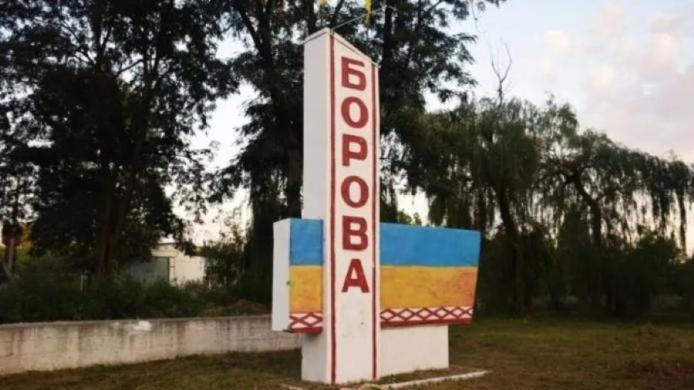
Borivska community: how people are accompanied after evacuation

For residents of the Borivska community, evacuation from frontline villages is just the first step. After leaving, people are helped to renew their documents, determine their place of residence, obtain IDP status, and find temporary housing. According to the head of the Borivska SVA, Olena Klymenko, evacuation from a dangerous area does not end when a person leaves their native village. Especially when it comes to elderly people, people with disabilities, or families who cannot rent housing on their own. In the Borivska community, after evacuation, they try to help people go through the next stages — from documents to finding a place where they can stay. Some of the locals are taken out by the military. This happens at the request of the residents themselves. The person leaves the dangerous area closer to a place where it is already safer to organize a meeting. Then, community representatives find out where they want to go, whether they have documents, and what kind of assistance they need. “We try our best to help and organize further location through the regional coordination center,” says Olena Klymenko. If a person has lost their documents or they need to be reissued, they are helped to resolve this issue as well. For those who cannot rent housing on their own, temporary accommodation, in particular dormitories, is one of the options. “To find a place to stay temporarily, evacuees use the Poruch system. Its peculiarity is that they can choose housing for a person not simply on the principle of “there is a free place”, but taking into account their needs,” the official notes. For example, for a person with a disability, it is important that the building has a ramp or elevator. For someone, the floor or other living conditions may be of fundamental importance. According to Olena Klymenko, community workers show evacuees available options and help them decide. “Many agree to a dormitory,” says the head of the Borivska SVA. A separate issue is what to do with people who have already left, but due to age, health or other circumstances cannot independently solve everyday issues. “Charitable and public organizations are involved in the work here. In particular, the NGO “Right to Protection” in places of temporary residence. Its employees can accompany people who find it difficult to independently obtain humanitarian aid, a pension, or purchase necessary things,” says Olena Klymenko. Another area of the community’s work is assistance with paperwork and IDP status. After moving, a person, if necessary, can be accompanied to the appropriate institutions, help reissue documents, and submit the necessary applications. The community’s experience shows that the mere fact of leaving does not solve all of a person’s problems. After the move, you need to find a place to live, renew documents, obtain the necessary statuses and payments, get basic necessities, and sometimes find a person or organization that will help with the simplest daily tasks. “That is why the community tries to accompany evacuees even after they leave. Therefore, you should not be afraid to leave. It is better to do it now and save your life,” says Olena Klymenko.

Чмут Тетяна
Тетяна Чмут, основна спеціалізація -новини, інтерв'ю, культура. Досвід роботи: з липня 1994-го по лютий 2022-го працювала у районній газеті "Вісті Балаклійщини на різних посадах (кореспондентка, відповідальний секретар, заступник редактора). З липня 2025 - кореспонденткою районного медіа "Обрії Ізюмщини". Освіта: у…